

Arsenic represented by symbol As is the 52nd most abundant element in the earth’s crust. Arsenic is notorious as a poison and is used as insecticide. It is used as a doping element in semiconductors which form the basis for microelectronic devices. Arsenic is present in the same group as Nitrogen and Phosphorus. While Nitrogen and Phosphorus are fertilizers critical for plant growth and human survival, Arsenic is known for its toxic and poisonous nature. In this blog, I discuss the properties of Arsenic that have a direct effect on its applications. I try not to delve much into scientific aspects and thereby make this blog comprehensible for all readers regardless of their background in science.
About Arsenic
Arsenic is a metalloid. Metalloids exhibit properties of both metals and non-metals. Metals and non-metals show different behavior in sharing of electrons during bonding with other elements. Metals donate electrons and primarily form ionic bonds. Non-metals share electrons with other elements during bond formation and primarily form covalent bonds. Arsenic belongs to Group V in the periodic table which implies it has 5 valence electrons. Valence electrons are the electrons that take part in bonding and reactions. Its atomic number is 33. Its electronic configuration is 1s22s22p63s23p64s23d103p3. Arsenic though is in Group V shows variable valency of 5 and 3. As5+ exhibits valency of 5 where the 3 electrons from 3p orbital and 2 electrons from 4s orbital take part in bonding while As3+ exhibits valency of 3 where the 3 electrons from 3p orbital alone take part in bonding.
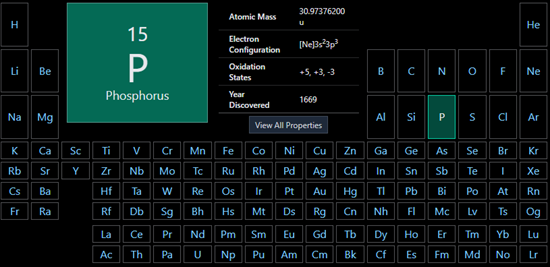
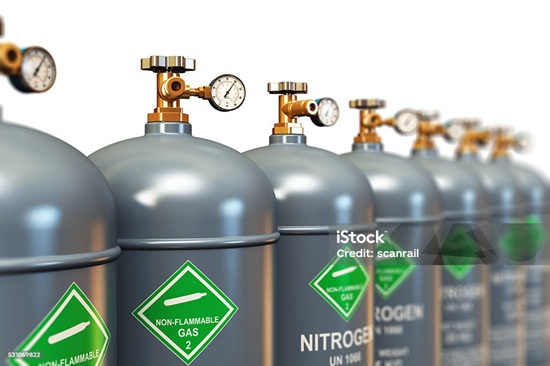
Arsenic is in the same group as Nitrogen and Phosphorus. I have discussed Nitrogen Nitrogen – the most abundant gas in the air and a core element for our growth and living – Foxtail Research and Phosphorus Phosphorus – a fascinating multi-faceted element with unique properties and wide-spread applications and uses – Foxtail Research in my previous blogs. I recommend reading the Phosphorus article before reading through this article as properties of Arsenic are discussed in relation to Phosphorus to explain the poisonous nature of Arsenic.
Extraction of Arsenic
Arsenic like Phosphorus is hidden in rocks and is released from rocks from rain and weathering action. It is present as ores mostly as sulphides, i.e. with another element called Sulphur. This naturally occurring Arsenic ore is called Arsenopyrite (Fe3As2, FeS) which exists in white-gray color with a metallic lustre. When these ores are roasted (heated) in the absence of air, Arsenic is obtained as a byproduct. The Arsenic so obtained tends to combine with Oxygen to form Arsenic oxide. Therefore, the Arsenic oxide obtained is then treated with another element C to get Arsenic. Arsenic sublimes, i.e. the solid directly becomes vapor and is stored as a gas. The other common ores of Arsenic are realgar As2S4 (red-orange colour) and orpiment As2S3 (yellow colour). Realgar and orpiment are found in volcanic areas.
Properties and applications of Arsenic
Arsenic’s similarity to Phosphorus and its behavior as poison/insecticide
Arsenic is present in rocks as its ores and Arsenic is extracted from its ores as mentioned above. Arsenic like Phosphorus is present as Network Atomic Solid as As4 molecules. The As atoms are arranged in a tetrahedral geometry similar to the P4 molecule. The Arsenic though is bigger in size than Phosphorus and hence is very unstable.
While Arsenic is stable in dry air, when it is exposed to moist air it forms Arsenous oxide molecule As2O6 (As3+ form) and if exposed more to moist air, forms As4O10 (As5+ form). Arsenous oxide or Arsenic oxide are both toxic. The formation of Arsenic-Oxygen compounds is similar to the formation of P2O6 and P4O10 phosphate molecules.
Arsenous oxide when dissolved in water forms Arsenous acid H3AsO3 and Arsenic acid when dissolved in water forms Arsenic acid H3AsO4. Note the similarity to formation of Phosphorous acid H3PO3 and Phosphoric acid H3PO4 when Phosphate ions (i.e. Phosphorus – Oxygen ion) is dissolved in water. Phosphoric acid is an extremely important and useful acid used for many industrial applications. However, it is not the same with Arsenic Acid H3AsO4.
Such close similarities of Arsenic with Phosphorus imply why Arsenic is a poison. It mimics Phosphorus which is an extremely important biomolecule. We saw in the blog article about Phosphorus that phosphate ions in phospholipids act as cell defense molecules in the cell membrane allowing selective transportation of ions inside and outside the cell. When such important molecular structures are mimicked by Arsenic, the cell cannot function normally. Thus Arsenic has the tendency to form structurally similar Phosphate molecules which makes it a poison inside the body.
Further, Arsenic undergoes reactions similar to Phosphorus. Arsenic forms AsH3 hydride gas as Phosphorus forms PH3. The common name for AsH3 is Paris Green. Paris Green when exposed to mold becomes a severe poison. It becomes heavier than air and sinks on the floor causing severe toxicity to the surroundings.
Inorganic Arsenic molecules, i.e. molecules containing Arsenic with another element except Carbon are replaced by relatively safer Organic Arsenic molecules, i.e. molecules containing Arsenic and Carbon. Organic Arsenic molecules are less toxic than Inorganic Arsenic molecules probably due to the non-polar nature of organic molecules. Organic Arsenic molecules are used as insecticides as a better and safer option.
We did see that Nitrogen, Phosphorus and Arsenic are in the same group with Nitrogen at the top followed by Phosphorus and then Arsenic. Knowing so, it is natural to extrapolate our thoughts and question if Arsenic can mimic Phosphorus and behave as poison, then why Phosphorus cannot mimic Nitrogen and disrupt the role of Nitrogen molecules. However, the way Nature has created these elements are different and this prevents such behavior. We did learn that Nitrogen is an inert gaseous molecule forming Nitrogen N2 molecules with a high dissociation energy and with a strong triple bond between the two Nitrogen atoms. On the other hand, Phosphorus is an unstable reactive solid forming Phosphate structure PO43-. Such a stark difference in stability, structure and form prevents Phosphorus from behaving similar to Nitrogen.
Network Atomic structure and as a doping element in semiconductor
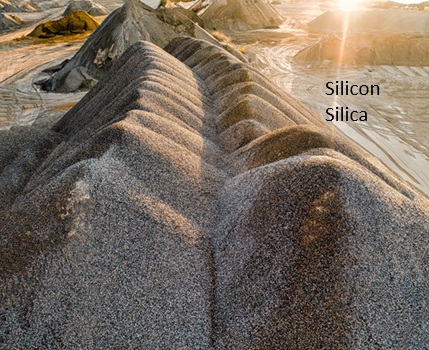
We have seen in the previous article about Silicon and its working as a semiconductor – Silicon – the element in everyday use from ancient times to current digital age – Foxtail Research . Silicon and Arsenic have crystal structures in their solid state which makes them compatible for replacing crystal lattice points of Silicon with Arsenic thus forming n-type Silicon-based semiconductors. Silicon has four valence electrons and Arsenic has five valence electrons, i.e. one more valence electron than Silicon. By doping Silicon with Arsenic and replacing a few Silicon atoms with Arsenic atoms, the Silicon surface (or silicon wafer) gains one more electron in each doped crystal lattice point.
Four valence electrons in Arsenic form four bonds with Silicon leaving the fifth valence electron free and it gets implanted near the conduction band. The free flow of electrons increases the conductivity of Silicon by reducing the band gap between valence band and conduction band. The free flow of electrons elevates Silicon from semiconductor to conductor. Using such doping elements in Silicon paves way for controlled design of Silicon Chips which are used for designing microelectronic devices. The electrical conductivity or the flow of current on Silicon chips is managed through external switches.
Due to size differences between Silicon and Arsenic, Arsenic is used as a dopant for Germanium-based semiconductors too. Germanium Ge is just below Silicon in the same group and before Arsenic in the same period or row in the periodic table.
It should however be noted that Arsenic is a toxic substance and using it in semiconductors might pose the risk of chronic exposure.
Crystal structure of Arsenic and its application in Lead Alloys
Lead is an extensively used metal with many industrial applications. Arsenic is used to harden Lead so that Lead can resist deformation, bending, and corrosion. We will see more about such properties of Lead when I write about Lead in my later blog articles. Arsenic forms minute crystal ‘grains’ and fills in the Lead matrix and makes it harder. I wanted to mention this application to point out that Arsenic is used in industrial applications. However, lead with Arsenic is toxic and should be handled with caution.
Summary
In this blog article, I discussed the general properties of Arsenic and related its properties and applications. Arsenic is a poisonous element and we saw that it acts as a poison by mimicking Phosphorus. It has structure and reactions similar to Phosphorus compounds and thereby impairs the activity of the cell. And chronic exposure to Arsenic can lead to fatality. Organic Arsenic compounds are used as insecticides. Arsenic like Phosphorus is used to form n-type semiconductors. Further, Arsenic is used in extremely minute quantities in industrial applications such as hardening of Lead. However, it is to be noted that chronic exposure to Arsenic based products even if used in minute quantities can lead to dangerous situations.
Bibliography
1. Concise Inorganic Chemistry, J.D.Lee, Fifth Edition, Educational Low-Priced Books Scheme (ELBS) funded by the British Government
2. Chemistry, Steven S. Zumdahl, Second Edition, D. C. Heath and Company
3. Mineral Commodities Summary 2026, US Geological Survey
4. PubChem database – Arsenic | As (Element) – PubChem
Image courtesy: https://pubchem.ncbi.nlm.nih.gov/element/Arsenic


Leave a Reply